My twin daughters were six when their mother left, and from then on, the three of us handled everything together. By 18, they were preparing for college and were more independent than ever. That's why their Father's Day confession caught me completely off guard.
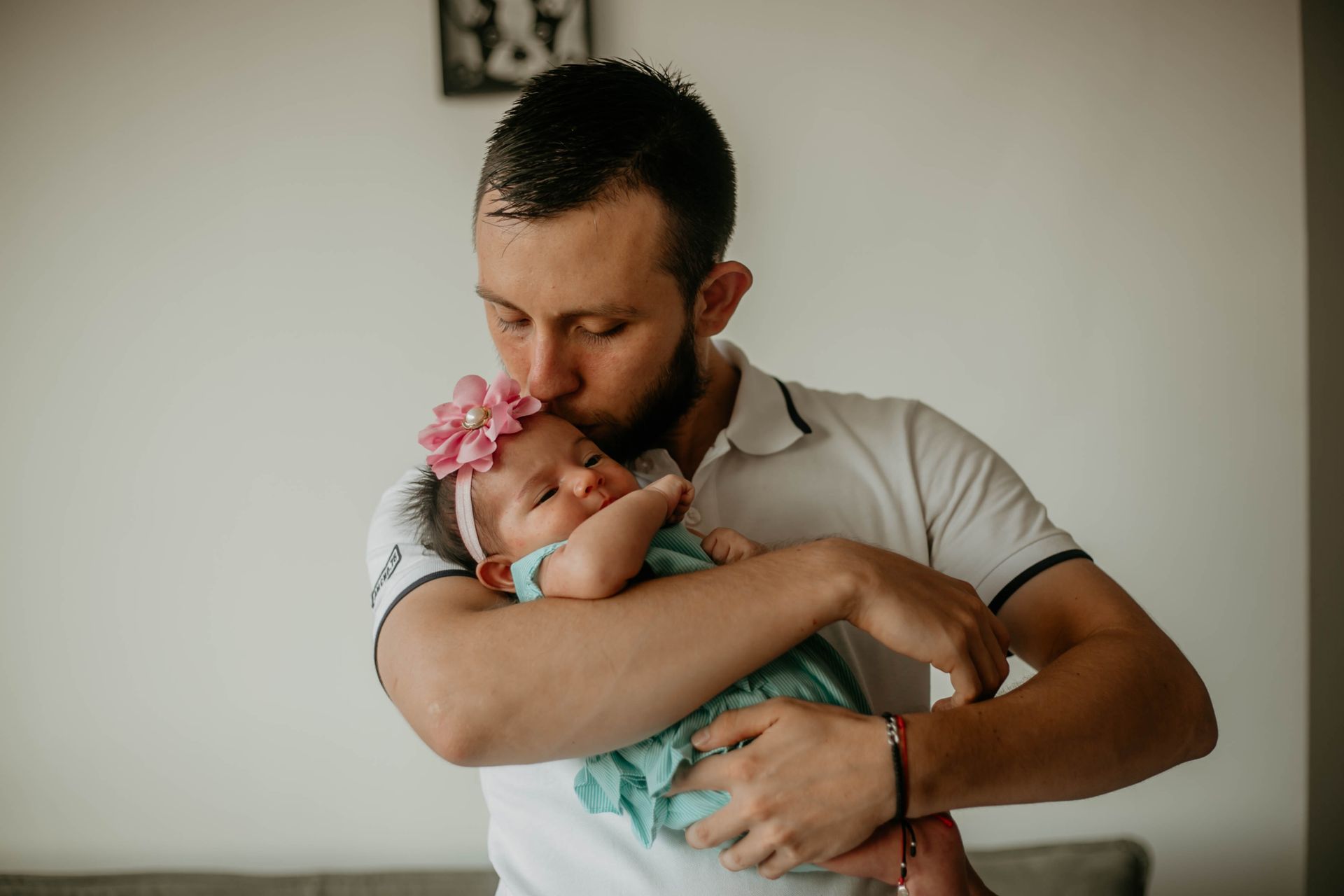
I've raised my twin daughters, Ava and Mia, on my own since they were six years old.
They're 18 now.
Both use wheelchairs because of a spinal condition they were born with.
Doctors told us early that the damage was permanent, so our lives became a long series of adjustments.
Physical therapy and accessible bathrooms.
School meetings, equipment fittings, and insurance arguments.
Finding restaurants where the "accessible entrance" wasn't actually around the back beside the dumpsters.
Their mother, Claire, left three months after their sixth birthday.
She said she couldn't do it anymore.
Those were almost her exact words.
"I can't spend the rest of my life doing this."
I remember staring at her across our kitchen table.
"Doing what?"
She started crying. "All of it."
I looked toward the hallway because the girls were asleep.
"You mean raising our children?"
"Don't make it sound like that."
"What else am I supposed to call it?"
She packed two bags that night.
For a few months, I thought she'd come back.
Then six months passed.
Then a year.
Eventually, I stopped waiting.
I never remarried.
I didn't make some noble decision to dedicate my entire existence to fatherhood.
I was just tired.
I was working full-time and raising two children who needed more practical help than most kids their age.
So, dating felt like adding another appointment to a calendar that was already full.
Besides, I liked our life.
It wasn't easy.
But it was ours.
Ava was always the louder twin.
Mia was quieter.
People sometimes mistook that for being less stubborn.
They usually learned the difference soon enough.
When Mia decided something, moving a mountain would've been easier than changing her mind.
By 18, both girls were fiercely independent.
Ava had been accepted to study political science.
Mia was going to do biomedical engineering.
Different colleges and different cities.
Both leaving in the fall.
I'd spent years preparing them for independence and discovered, too late, that independence meant they would actually leave.
Then Father's Day came.
Usually, they made breakfast.
By "made breakfast," I mean Ava supervised while Mia burned something.
That year, there was no smell of bacon.
No badly wrapped gift.
No ridiculous card.
Instead, when I came into the kitchen, both girls were sitting at the table, looking serious.
Ava said, "Dad, sit down."
"Just sit."
Every terrible possibility went through my head.
Parent brains are creative when they're scared.
A medical problem. Crime. I don't know.
"You're making me nervous," I said.
I sat. Mia reached across the table and took Ava's hand.
Ava looked at me.
"Please don't get angry."
"What happened?"
They looked scared.
"Whatever it is," I said, "just tell me."
Mia said, "We've been keeping something from you."
"For how long?"
"A few months."
I leaned back.
"Okay. What is it?"
Ava took a breath.
"Mom contacted us."
I didn't understand at first.
"Your mom?"
Even as I said it, I knew how stupid it sounded.
There was only one person they called Mom.
Or used to.
"Claire?"
Mia nodded.
I felt something in my chest go completely still.
"When?"
"About four months ago."
I looked from one daughter to the other.
"Four months?"
Ava said quickly, "We didn't answer at first."
"She messaged both of you?"
"Instagram first," Mia said. "Then she emailed me."
"What did she say?"
"That she wanted to talk."
I couldn't believe how calm my voice sounded.
"And you did?"
Ava looked down. "Eventually."
Mia said, "At first, we ignored her."
They exchanged a look.
Ava answered. "She said she was sick."
"How sick?"
Mia's eyes filled. "She has cancer."
I said nothing.
"It's advanced," she continued. "She's been in and out of the hospital."
I looked down at my hands.
I had imagined Claire in a thousand ways over the years.
Happy somewhere.
Remarried. Regretful. Indifferent.
I had never imagined her dying.
Ava said, "Dad?"
"How long have you been talking to her?"
"How have you been talking?"
"Via messages. Phone calls."
I stood and walked a few steps away from the table before turning back.
I asked, "Have you seen her?"
Mia nodded. "Twice."
"You visited her?"
"Without telling me?"
Ava said, "We're 18."
I turned toward her. "I know how old you are."
She flinched. I hated that.
So I lowered my voice.
"I'm not angry that you saw her."
Neither of them looked convinced. "I'm not."
Mia wiped at her eyes.
"Then why do you look angry?"
"Because you thought you had to hide it from me."
I sat again.
"Did you think I'd stop you?"
Ava said, "We didn't know."
"Then why didn't you tell me?"
"We wanted to figure out how we felt first," Mia said.
"And you couldn't do that with me knowing?"
Ava shook her head. "It wasn't like that."
"Then what was it like?"
She hesitated. "We thought you'd feel betrayed."
Mia added, "We know what she did to you."
"What she did to all of us."
"Yes."
Ava's voice cracked.
"And we thought maybe if we talked to her, you'd think we were choosing her."
I had spent 12 years trying to make sure they never felt abandoned again.
I'd worried about whether I was doing enough.
Whether I was too protective.
Whether I worked too much.
Whether I pushed them too hard toward independence.
I'd never considered that they might believe they owed me loyalty against their own mother.
I said, "Listen to me. You don't need my permission to know her."
Ava started crying. She covered her face.
Mia reached for her.
Ava looked at me. "We haven't forgiven her."
"You don't have to."
"She keeps apologizing."
"You don't have to forgive her because she's sick either."
Mia whispered, "She wants to see you."
"I can't," I said immediately.
Neither argued.
Then Mia said, "She asked once. We told her you probably wouldn't."
"Good, because I don't."
There was a long silence.
Then Ava said, "She's in the hospital again. They don't know if she'll go home this time."
Their sad expressions softened my tough stance.
If I were going to see her, I would do it for my daughters.
Otherwise, I owed her nothing.
Not forgiveness. Not love.
"When are you going?"
"Tomorrow."
I looked at their faces.
Not of me anymore.
Of losing someone they'd barely had time to know.
I sighed. "I'll drive you."
Mia frowned. "You don't have to."
"I know."
The next afternoon, I drove them to the hospital.
For most of the trip, we didn't talk.
Ava played with the edge of her sleeve.
Mia stared out the window.
When we got there, I told myself I'd wait downstairs.
Then Ava said, "Dad, will you come up?"
I almost said no.
Instead, I said, "For a few minutes."
Claire looked smaller than I remembered.
That was my first thought.
She was 51, but illness had taken something from her face.
Her hair was short and uneven from treatment.
There were tubes beside the bed.
For a second, we just looked at each other.
Twelve years collapsed into one hospital room.
She said, "Robert."
"Claire."
The girls moved beside her bed.
She smiled at them.
That hurt too. They had her eyes.
I'd forgotten.
Claire looked back at me. "Thank you for coming."
"I came for them."
"I know."
I stayed near the door.
She said, "I owe you an apology."
I almost laughed. "One?"
Her face tightened. "More than one."
I decided I didn't even have it in me to argue.
Claire looked down at her hands.
"I don't expect you to forgive me."
"I probably never will," I said.
"I need to tell you something anyway."
I waited.
She took a breath. "After the girls were born, I wasn't okay."
I said nothing.
"I was depressed."
"Lots of parents are depressed."
"Please, hear me out."
"Lots of parents don't leave."
"I tried so hard not to."
Her voice was weak but steady.
"There were days I was afraid to be alone with them."
"Why?"
"Because I was angry all the time. Then I'd hate myself for being angry."
She looked at Ava and Mia.
"I thought I would hurt you. But I never hurt you."
She continued. "But I had thoughts that scared me."
Ava and Mia looked surprised.
"They would both be crying, and I'd think, 'What if I scream at them? What if I shake someone?'"
Claire started crying. "I recognized that it meant I could be dangerous."
I felt my anger rising again. "So you left."
"Yes."
"For 12 years."
"I thought I would get help and come back."
"I was so lost and alone."
"Why didn't you get help?"
"I should have."
"Why didn't you call?"
"I didn't know what I would say."
"Why didn't you come back after a month? A year?"
She closed her eyes.
"Because every day I stayed gone made coming back harder."
I shook my head. "That's not an answer."
She looked at me.
"I told myself you were better at it. That the girls were safer with you. That coming back would confuse them. Every excuse made the next one easier."
"You could have gotten treatment."
The room went quiet.
And suddenly I didn't want to keep listing the things she had failed to do.
Not because they didn't matter.
Because Ava and Mia were sitting there hearing every one of them.
Claire turned toward the girls.
Ava frowned.
"What do you mean?"
"To fix it."
She wiped her face.
"I kept thinking someday I'd be stable enough, brave enough, less ashamed. Then the years passed."
Claire looked at her.
"Because I found out I might not get a someday."
That was probably the most honest thing she said.
I didn't forgive her. But I believed her.
There is a difference.
Before I left, Claire asked if she could speak to me alone.
The girls went into the hall.
Claire said, "Thank you."
"For what?"
"For raising them."
I looked through the glass toward the hallway.
She was silent.
"They needed their mother."
"I know."
"You should have been there."
Tears ran down her face.
I stood there for a moment.
Then I said, "I'm not going to try and stop them from seeing you."
She nodded.
"They're adults. They get to decide what they want from you."
"Thank you."
"But I won't be coming back."
Her face fell slightly. "I understand."
"This is my goodbye."
She looked at me for a long time. "I'm sorry, Robert."
I believed she was.
It just wasn't enough to repair the 12 years.
"I hope you find some peace," I said.
Then I left.
The girls kept visiting.
I drove them when they needed me to.
Sometimes one went without the other.
They didn't tell me everything they talked about, and I didn't ask.
That was theirs.
Ava was angry after most visits.
Mia was quieter.
One night, Mia came into my room and said, "Is it awful that I feel sorry for her?"
"No."
"I still hate what she did."
"You can do both."
She sat on the edge of my bed.
"I don't know if I forgive her."
"You don't need to decide."
"What if she dies before I do?"
"Then she dies before you decide."
Mia looked at me.
"That's just okay?"
"Of course."
A month after Father's Day, the girls came into the kitchen together again.
I knew before they spoke.
Ava's face was swollen from crying.
Mia said, "Mom died this morning."
I stood up. They both came toward me.
I held them.
And that was when I cried.
Not for my marriage.
That had died years earlier.
I cried because my daughters had lost their mother twice.
The funeral was six days later.
I went because they asked me.
I sat beside them.
People I didn't know hugged them.
A woman who said she had been Claire's friend for years told Ava, "Your mother talked about you constantly."
Ava waited until the woman walked away.
Then she whispered, "I don't know if that makes me feel better or worse."
I said, "You don't have to know."
At the cemetery, Mia broke down.
She just folded into herself.
I crouched beside her wheelchair.
She said, "I don't even know what I'm crying for."
I took her hand.
"You don't have to name it."
She shook her head.
"I miss someone I barely knew."
"I understand."
"I miss what she should've been."
"I know."
"That's stupid."
"No, it isn't."
She looked at me.
"You're allowed to grieve the mother you had and the one you should have had."
That made her cry harder.
So I stayed there.
Ava came over and took her sister's other hand.
That's how we stayed while they lowered Claire into the ground.
Three months later, it was time.
Our house became full of boxes as they got ready to leave for college.
Ava argued that she needed 12 pairs of shoes.
Mia argued that no human being needed 12 pairs of shoes.
I labeled chargers.
They removed my labels.
I made emergency lists.
They deleted half of them.
Finally, Ava said, "Dad, you've spent 18 years teaching us not to panic."
"Correct."
"So stop panicking."
"I am not panicking."
Mia looked at the six-page accessibility checklist in my hand.
"You laminated it."
"That's called preparation."
They both laughed.
On move-in day, I helped settle Mia first. Then Ava.
Different campuses. Different dorms. Different futures.
After I finished adjusting a desk in Ava's room for the third time, she said, "Dad."
"What?"
"That's rude."
"You've been here four hours."
"There were issues."
"The issue was you."
I laughed.
I hugged her carefully.
She whispered, "You know we're okay, right?"
My throat tightened. "I know."
"No. Really."
I looked at her.
She smiled. "You got us here."
I shook my head. "You got yourselves here."
"Yeah, but you gave us a push."
"Terrible wheelchair metaphor."
She groaned. "Please leave."
I laughed all the way to the elevator.
That night, I went home to an empty house for the first time in 12 years.
It was awful.
It was also exactly what was supposed to happen.
A week later, both girls video-called me.
Mia complained about a professor.
Ava complained about dining hall food.
They argued with each other for 20 minutes.
I barely spoke.
At one point, I just watched them.
Eighteen years old.
Independent. Stubborn. Still here.
Their mother came back too late to raise them.
She came back too late to undo what she'd done.
But not too late for them to hear her apology.
Not too late for them to ask questions.
Not too late for them to decide for themselves what she meant to them.
I still don't fully understand why Claire left.
Maybe I never will.
But I understand something else now.
My daughters did not betray me by opening a door I had closed.
They were allowed to know their mother.
They were allowed to love her, hate her, forgive her, or refuse to forgive her.
None of it changed what we were.
For 12 years, it had been the three of us.
Now they're building lives of their own.
And somehow, even with two college campuses between us, it still feels like the three of us.
Just farther apart.
Still showing up.
Still family.
If you were Robert, would you be hurt that your children secretly reconnected with the parent who abandoned them, or would you understand why they needed to make that choice for themselves?
Looking for another great read? Try this story: I thought my biggest wedding problem was the guest list — until my mother, who abandoned me because she 'wasn't meant to be a parent,' came back after 23 years, and everyone suddenly started acting strangely.