
My Husband Was in Charge of My $100 Birthday Cake – The Message on It Made the Whole Room Go Silent
Jun 08, 2026




One unsigned box, one tiny shoe, and four chilling words were all it took to drag Miriam's buried past into the middle of her 43rd birthday.
Advertisement
My 43rd birthday small. I had a big one when I turned 40, and did not want another big celebration in my 40s.
However, the day turned out quite different from what I expected.
At 11:40 that morning, the doorbell rang.
I was in the kitchen rinsing strawberries when my husband, Rhode, called from his office upstairs, "Can you get that? I'm on a call."
I wiped my hands on a dish towel and opened the front door.
A delivery driver stood there holding a small brown box against his chest.
"Miriam?"
"That's me."
He handed it over, had me sign something on a little screen, nodded, and left.
I looked at the box, thinking it was a birthday present from a colleague or a friend, but it was just plain with no decorations or anything.
I carried it into the kitchen and turned it over in my hands. It had no return address. Just my name and our house.
Advertisement
Rhode came downstairs a minute later, loosening his tie.
"More presents?" he asked with a grin.
"I wasn't expecting any other gift."
He took the box from me, gave it a little shake, and frowned. "No sender?"
I shook my head.
"Then wait until dinner before you open the surprise gift," he said. "Shantel will want to be here if it's something dramatic. We can open gifts and cut the cake after dinner."
I smiled. "I just wanted a simple day. Looks like it will be an interesting birthday."
"When mystery boxes start showing up on my wife's doorstep, a simple day flies out the window."
He kissed my forehead and headed back upstairs.
I wish I had listened to him.
But an hour later, standing alone in the kitchen with the quiet pressing in around me, curiosity won.
I took a knife from the drawer and cut through the tape.
Advertisement
Inside was another box. Smaller and white.
I felt like this kind of careful layering was no random delivery. Someone wanted the opening of this box to feel deliberate, intimate, and slow.
My chest tightened after I lifted the lid.
Inside was a tiny blue shoe.
One little baby shoe with a scuffed white sole and a faded duck stitched near the toe.
For a second, the room tipped.
I gripped the edge of the table.
I knew that shoe.
I had bought that shoe 21 years earlier, in a discount shop two bus rides from the one-room apartment where I used to live.
I purchased it after standing in front of a rack for nearly 30 minutes because I only had enough money for either diapers or a pair of shoes, not both. I had bought the diapers.
Then, at the last second, I dug coins from the bottom of my purse and bought the shoes too because they were the first beautiful thing I had ever bought for my baby that wasn't strictly necessary.
Advertisement
Under the shoe was a folded note. My fingers were shaking so hard I nearly dropped it.
I opened it, and it read, "You know what happened."
That was all. No explanation.
Just those four words, and the tiny shoe sitting in white tissue paper like a buried piece of my life had been dug up and mailed back to me.
I sat down without meaning to.
My first thought was, who found the show and sent it?
My second thought was, no one knows.
Not Rhode, my daughter, Shantel, my friends, or anyone from the life I had now.
Because before Rhode, before our house, before school runs and mortgage payments and birthday cakes, there had been another life.
A life so sharp, hungry, and frightened that even now I hated touching it in memory.
I was 20 when I got pregnant.
The father was a man named Julian who liked quoting poetry and talking about revolution. He disappeared so completely after I told him that sometimes I wondered if he had ever really existed.
Advertisement
One day, he was sitting cross-legged on my apartment floor, promising we would "figure it out together," and two days later, his number was disconnected, and his roommate said he'd left town.
I had three jobs then. Morning shifts at a diner, evening stock work at a pharmacy, and night cleaning in an office building twice a week.
I dropped out of school one class short of keeping my scholarship. I ate cereal for dinner more nights than I could count. The apartment had a window that wouldn't close all the way in winter.
Then I had a baby boy.
I named him Gabriel. Even now, after all these years, the name still lives inside me like a bruise.
He was so small when he was born. Angry little fists and thick dark hair. His cry could slice through bone. I loved him in the fierce way mothers love their children. I estimated my ability to keep him alive and healthy because, for a year, I did it somehow.
For a year, I held my life together with bad coffee, panic, and luck.
Then the luck ran out.
Rent went up, and my boss cut hours. Gabriel got sick for one month, then I got sick the next. I started leaving him with neighbors I barely trusted because I had no choice.
Advertisement
Once, on the bus home, I realized I had ridden three stops past ours because I had fallen asleep sitting up with his diaper bag in my lap.
I kept telling myself I just had to survive one more week.
One more month and one more shift, and then things would get better.
Then one afternoon, I came home and found a red notice on the door.
My landlord had given me a warning that if I did not pay him soon, he would get an eviction notice.
I went inside, sat on the floor with Gabriel in my lap, and cried so hard he started crying too.
That was the day something in me broke.
Three days later, I packed a diaper bag, wrapped him in his yellow blanket, and took him to St. Bartholomew's Children's Home.
Even writing that feels like dragging glass through my throat.
I had heard the orphanage sometimes helped place babies faster if the mother came in person. I don't know what I thought would happen after. I just knew I could not keep pretending love alone was enough for my baby. He needed more. More than I had.
Advertisement
I remember the walk from the bus stop. The heat, the sound of traffic, and Gabriel asleep against my chest. I also carried the little blue shoes in the bag. As much as he had outgrown them, I couldn't make myself leave them behind.
Just a few yards from the entrance, a man stepped out from beside a parked car.
He was in his 40s, maybe older, with kind eyes, a pressed shirt, and the hesitant posture of someone trying not to scare me.
"Excuse me," he said gently. "Are you heading to the orphanage?"
I clutched Gabriel tighter. "Yes. Why?"
He looked embarrassed. "My name is Desmond. My wife and I have been trying to adopt for months, but we have not yet been successful. I'm sorry, I know this is inappropriate, but..." His voice caught. "Is there any chance you were giving your baby up to the orphanage?"
I was too tired to feel shame or anger. I was tired beyond reason. Empty. And he was looking at my baby with tears already in his eyes.
I said, "I can't give him what he needs."
Desmond nodded like he understood that sentence in his bones.
Advertisement
"My wife and I tried to have our own for years, but now we know adoption is the only way for us to become parents," he said quietly. "We have the resources to take care of a baby. And not just that, we are full of love and care.
I stared at him.
He added, "You don't have to decide because I asked. You can go inside. You can talk to them. But if you want to know whether one person could want your baby immediately and completely, the answer is us."
I stood there on that sidewalk with my son's breath warm against my neck and thought, this is madness.
And also, maybe, mercy.
I do not know how long we talked. I only know that by the end of it, I walked home alone, my heart breaking as I tried to reassure myself that I had done a selfless and kind thing for both my baby and the couple.
I recalled Desmond holding Gabriel with such terrifying tenderness that I almost took him back just because it hurt too much not to.
Instead, I took the blue shoes from the diaper bag and pressed them into Desmond's hands.
"He liked these," I said, though Gabriel was one and had no opinions on shoes.
Advertisement
Desmond nodded once, like I had entrusted him with something holy.
Then I walked away without my son.
Now, 21 years later, that little shoe sat on my kitchen table like the past had grown fingers and rung the bell.
I heard Rhode's footsteps on the stairs before I realized I was crying.
"Miriam?"
He came into the kitchen, saw my face, saw the box, and crossed the room in three quick steps.
"What happened?"
I tried to answer and couldn't. He looked down at the shoe, then the note, and frowned.
"What is this?"
I sat there with twenty years of silence pressing at my back and understood, suddenly and completely, that I could not lie anymore. Not if the past had found my front door.
Rhode pulled out the chair beside me. "Miriam, what is it? Why are you crying? Talk to me."
So I did.
Advertisement
I told him about Julian, poverty, Gabriel, St. Bartholomew's, Desmond, the sidewalk, and the shoes.
Rhode went very still. He did not interrupt once. He only asked, eventually, "Why didn't you tell me?"
"Because by the time I met you, it felt like another person's life," I whispered. "And because I was ashamed."
His face changed at that. Hurt, yes, but softer too.
"Ashamed of what?"
"Of giving him away."
Rhode took a long breath and looked at the shoe again.
Then he reached for my hand.
"You should have told me," he said. "But you don't have to survive this alone."
That almost broke me more than the box had.
When Shantel came home from school, we told her too.
She was 17 then, old enough to understand and young enough to still stare at me as if I had turned into someone else halfway through the conversation.
Advertisement
"So I have a brother?" she asked.
"I don't know if he was the one who sent the box, but yes, you have one," I said.
She was quiet for a moment. Then she looked at the shoe, the note, and finally at me.
"Do you think he wants to meet if he was the one who sent these?"
"I don't know."
She nodded slowly. "If it is him, then he wants you to know he found you."
I then told them about the phone number written on the back of the note. I had stared at it, too afraid to call because I didn't know who would be on the other side.
All evening I stared at it.
Rhode made dinner, but none of us ate. The cake sat untouched on the counter. At 8:30, after pacing the hallway for 20 minutes, I finally picked up my phone and dialed.
A man answered on the third ring.
"Hello?"
His voice was young and steady.
Advertisement
For a second, I could not speak.
Then I said, "Did you send the box to my house?"
A thick silence fell.
When he spoke again, his voice had changed. It was softer and more careful.
"So you are Miriam?"
"Yes."
He exhaled shakily. "My name is Dennis."
The world narrowed around that name.
Dennis, not Gabriel. Of course. Desmond had renamed him, or maybe they had chosen it together over time. The baby I had lost no longer existed except in me.
"I think," he said, "you're my mother."
I sat down on the stairs because my knees would not hold me.
Rhode came and stood halfway up the hall, watching me, saying nothing.
"I think so too," I whispered.
Dennis told me his adoptive father, Desmond, had died three years earlier. Five years after his adoptive mother died. Before Desmond died, he had told Dennis the truth about the day he became his son.
Advertisement
He gave him details about me, including my full name.
He gave him the shoes as the only thing his biological mother left for him.
"I didn't look for you right away," Dennis said. "I was angry for a long time. Then guilty for being angry at someone I didn't know. Then scared."
"I understand."
"I don't think you do," he said, not cruelly. Just honestly.
I closed my eyes.
He had a point.
We agreed to meet on Sunday at a small restaurant halfway between our towns. Public, neutral, no sudden invasions of each other's homes.
After I hung up, Rhode sat beside me on the stairs.
"Dennis," he said.
I nodded.
"How did he sound?"
I thought about that.
"Like he didn't know what to do with me now that he has found me."
Advertisement
Sunday came too fast.
I changed my clothes three times. Rhode offered to come and then, wisely, did not insist when I said I needed to do the first part alone.
Dennis was already there when I arrived.
He stood when he saw me.
He was tall. Taller than Rhode. Broad-shouldered and dark-haired. And his face hit me like a physical blow, because it was mine around the eyes and Julian's around the mouth and completely his own in every other way.
For one impossible second, I saw the baby he had been and the man he had become layered together.
"You came," he said.
"Of course I came."
He gave a small nod and sat back down.
The first few minutes were terrible and hard.
Coffee cooled between us, and questions were asked too carefully. There were long pauses. Both of us were trying not to touch the biggest wound too quickly.
Then he reached into his bag and put the second shoe on the table.
Advertisement
He had kept the pair.
He then asked why in a tone that wasn't accusing but wasn't gentle either.
So I told him the truth about the money, breakdown, hunger, eviction notice, and the kind stranger outside the orphanage. The way I had convinced myself that loving him meant letting someone else give him what I couldn't.
Dennis listened without interrupting, both hands wrapped around his mug.
When I finished, he looked down for a long time.
Finally, he said, "He was a good father. My mom was also wonderful."
I started crying at once.
"I'm glad," I whispered.
"They loved me. Really loved me." Dennis's own eyes were wet now. "And that makes this harder, not easier. Because if he had been terrible, I could've hated what you did."
"I never wanted you to be unhappy."
"I know that now," he said. "I didn't know when my parents died."
I nodded.
Advertisement
He told me about Desmond.
About fishing trips he hated, and piano lessons he quit, and a dog named Rusty who had once eaten an entire Thanksgiving pie. Desmond had never told Dennis that he was adopted because of how complicated the entire thing was.
He told him after he fell sick and was sure he would not survive the illness. Desmond told Dennis about the woman who gave birth to him, that she had been young and struggling and had made a choice out of love and fear.
"I didn't believe the love part after he died," Dennis said.
"And now?"
He looked at me directly. "Now I see that you loved me, just as he said."
That was the moment I knew there might be a path forward.
Not instant forgiveness.
But a path.
By the end of lunch, we were exhausted, drained, and raw, having said all we had held in our chests.
Dennis asked if he could meet Rhode and Shantel sometime. I said yes. I asked if I could know more about his life. He said yes.
Advertisement
Then, just before we left, he said, "I almost didn't contact you."
"Why did you?"
He smiled sadly and touched the tiny shoe.
"Because my father kept these for twenty years. A man doesn't keep something that small unless it means the story mattered to him. I thought... maybe that meant you mattered too."
I cried all the way to my car.
It has been almost a year since that birthday.
Dennis has had dinner at our house several times. The first time, Shantel watched him like she was trying to solve an equation. By dessert, they found something to bond over, their shared taste of music.
Rhode has been better than I deserve.
There are still hard days.
We are not pretending that 21 lost years can be fixed with casseroles and honesty.
But we are trying.
And sometimes, trying is the only thing people can do for each other.
Advertisement
I turned 44 last week.
This time, when the doorbell rang, I flinched.
Rhode laughed from the kitchen and said, "It's probably just flowers."
It was. From Dennis.
The card said, "Still figuring out what to call you. But I wanted you to have something beautiful in your life today, because you have been a beautiful addition in mine."
I stood in the doorway holding those flowers and cried until Rhode took them from my hands and pulled me into his chest.
Today, I am glad I opened that box alone. It gave me time to process everything before I involved my family.
It led me back to a past I had stored away.
And it gave me back my son.
Now, the question at the center of this story is: When a painful choice from youth leads to a child's better life, does that lessen the grief of giving them up, or make it more complicated?
Enjoyed the read? Here's another one you might like: Gia thought she knew how to get through another birthday with an empty chair at the table. But when her mother brings out a box from the past, old feelings rise, silence breaks, and two sisters are forced to face what they have avoided for years.
Advertisement
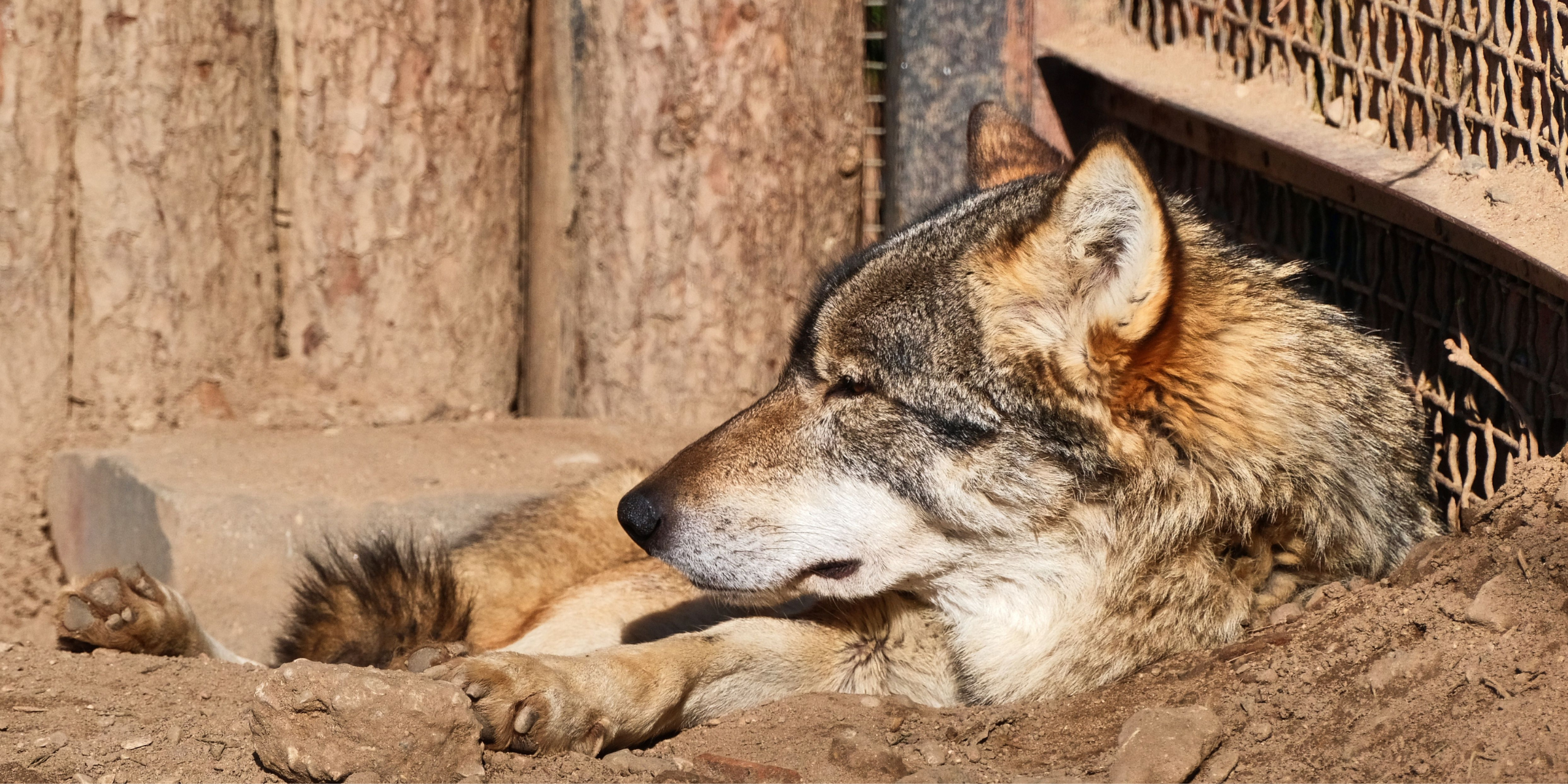
I thought I was helping a dying wolf. At least that's what I believed when it appeared in my yard and seemed determined to get my attention. If I hadn't followed it into the forest that day, a truth that had been hidden for decades would have died with it.
Jun 16, 2026

They had packed the metal box with friendship bracelets, movie tickets, and letters to their future selves before burying it behind the school in 2006. Twenty years later, they opened it expecting memories, but one new item inside turned the reunion into a reckoning no one was ready for.
Jun 15, 2026
For months, Myra cleaned up the garbage her neighbor kept leaving on her property. She was furious, exhausted, and ready to snap. But when Tom's own yard became the scene of a shocking mess, she discovered there was more behind his cruelty than she knew.
Jun 10, 2026

Six days before my birthday, I found two identical diamond bracelets in my husband's closet. For nearly a week, I obsessed over who the second one was for. When my husband finally revealed the answer at my birthday dinner, I discovered something far more painful.
Jun 10, 2026
After Margaret's funeral, I went into her room expecting silence, dust, and grief. Instead, I found a locked box hidden behind her winter coats with my name on it. For twelve years, I thought I'd been invisible in that house. Margaret's secret proved I was wrong.
Jun 16, 2026

For two years, I worked myself raw to keep my husband alive and our daughter’s future untouched. Then he left, calling my sacrifice control. I might have believed grief was the worst he could give me, until one message from my daughter made me open the papers he'd hidden.
Jun 16, 2026
By the time I turned 30, I'd made peace with the idea that certain questions would never be answered. What I didn't know was that the past had been quietly making its way back to me all along.
Jun 17, 2026
I walked into our 50-year class reunion expecting old faces and comfortable nostalgia. What I got instead was the worst night of my life, and the beginning of a truth that had been buried so carefully, by so many people, for so long that finding it nearly broke me completely.
Jun 04, 2026
I came home early on our tenth wedding anniversary and caught my husband in bed with my best friend. I thought I was discovering an affair. I had no idea I was looking at the final piece of a betrayal that had been unfolding for years.
Jun 11, 2026
My daughter looked beautiful in the same dress I wore to prom in 1996, and for a few hours I let myself believe the past had finally gone quiet. Then her boyfriend approached me after the dance, pulled out an old photograph, and told me he knew the truth about that night.
Jun 11, 2026
My classmates spent four years calling me a swamp frog. Then at prom, they crowned me queen in front of the whole school—just so they could laugh while I stood on stage. But before I walked away, I grabbed the microphone and revealed a secret that destroyed their joke forever.
Jun 16, 2026
I married a 76-year-old widow because I needed her money. For four years, her family treated me like a thief waiting for her to die. After her funeral, I expected an inheritance—or nothing at all. Instead, her lawyer handed me an old sewing machine and a letter nobody wanted me to read.
Jun 16, 2026
Twenty years earlier, I'd spent an entire weekend cutting my first love out of every photograph I owned. Then my daughter brought her new boyfriend home, and I nearly choked on my coffee. Because the young man standing beside her looked exactly like the man I'd spent two decades trying to forget.
Jun 15, 2026

When my husband brought his pregnant mistress into our home, I thought betrayal was the worst pain he could cause me. Seven months later, she appeared at my door in the rain, shaking and alone. What she told me proved his cruelty had gone much deeper.
Jun 10, 2026