I spent eight years believing my son's disappearance would never be explained. I never imagined someone else had spent those same years searching for him too, or that the answers we'd both been chasing would change everything.
The knock came just after two in the afternoon.
When I opened the door, a woman I'd never seen before stood on my porch with tears in her eyes and a worn newspaper clipping clutched tightly in her hands.
She looked at me for several long seconds before finally saying,
"I was the last person to see your son the day he disappeared."
Every ounce of strength left my body.
Her voice trembled.
"My name is Bonnie."
She swallowed hard.
"And I've spent the last eight years trying to find him."
For a moment, I couldn't breathe.
Eight birthdays.
Eight Christmases.
Eight years of setting an extra plate at the dinner table because some foolish part of me still couldn't accept he wasn't walking through that front door.
"What do you know?" I demanded, grabbing the edge of the doorway to steady myself.
"What happened to Mateo?"
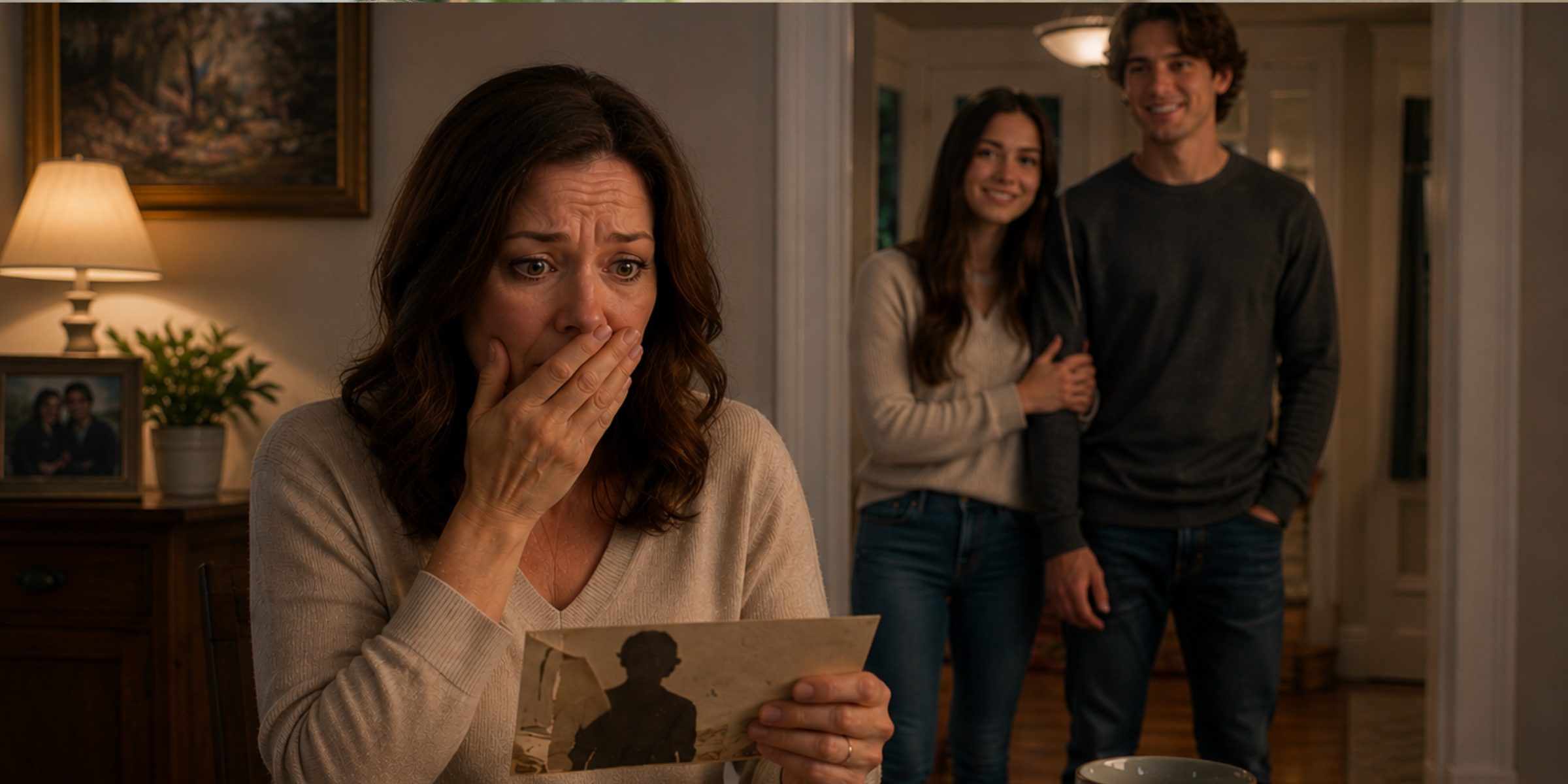
Bonnie looked down at the newspaper clipping in her hands.
It was old and yellowed around the edges.
The photograph showed my son exactly as he looked the day he vanished.
She held it so carefully that I realized she'd carried it many times before.
"I think..." she whispered. "I think I know where your son is."
My knees nearly gave out. I had spent eight years believing the hardest part of losing my son was not knowing where he'd gone. I was about to discover that the truth was far more unbelievable than anything I had imagined.
Mateo was 18 when he disappeared.
He'd left home on an ordinary Saturday afternoon to buy a few things from the neighborhood store.
"I'll be back in half an hour," he'd called as he grabbed his wallet.
I remember smiling without looking up from the sink.
"Don't forget the milk."
He laughed.
Those were the last words I heard from my son.
Thirty minutes passed.
Then an hour.
I told myself he had probably run into a friend.
Maybe he'd stopped to help someone.
Maybe he'd forgotten to charge his phone.
I called anyway.
It rang.
No answer.
I called again.
And again.
By the sixth call, it went straight to voicemail.
Something inside me broke.
I drove to the neighborhood store myself.
The cashier looked at me apologetically.
"I'm sorry," she said. "I haven't seen him today."
I walked every street between the store and our house, calling Mateo's name until my voice grew hoarse. By midnight, I was filing a missing person's report.
Over the next many weeks, the police searched everywhere.
They questioned his friends, teachers, and coworkers.
Detectives searched his bedroom, hoping to find a clue we'd somehow missed.
They reviewed surveillance cameras from nearby businesses, and tracked his phone until its signal suddenly disappeared.
One officer even carried a photograph of Mateo door to door through our neighborhood.
Every lead ended the same way.
It was as though my son had vanished between our front door and the grocery store.
Months became years. People gently encouraged me to move on.
I couldn't.
Mateo's room stayed exactly as he'd left it.
His clothes still hung neatly in the closet.
His guitar leaned against the wall beside the window, waiting for hands that never came back.
Sometimes I'd dust it without moving it.
I could still hear his voice complaining whenever I corrected his posture.
"Relax your hand," I'd tell him.
"You're holding your wrist too tight."
He'd roll his eyes every single time.
Then we'd both laugh.
After he disappeared, I never touched that guitar again.
Sometimes I would sit in that room just to remember what hope sounded like.
And then Bonnie knocked on my door.
I led her into the living room, but neither of us sat down. She couldn't stop looking at the photographs lining the mantel.
Birthday parties.
A graduation portrait Mateo had insisted made him look older than he really was.
Her eyes lingered on each one.
"I'm so sorry," she whispered.
I folded my arms tightly across my chest.
"You said you were the last person to see him."
She nodded.
"I was."
"Then tell me where my son has been for the last eight years."
Fresh tears filled her eyes.
"I wish it were that simple."
I felt anger rising inside me.
"For eight years I've begged strangers for answers."
My voice cracked.
"I buried my husband five years ago without him ever knowing what happened to his only son."
Bonnie lowered her head.
"I know."
I stepped closer.
"If you did, you would've knocked on this door eight years ago."
She didn't argue. She simply reached into her handbag and removed a small leather wallet.
It looked old and badly worn.
She placed it carefully on the coffee table.
"I've carried this with me ever since that day."
I frowned.
It wasn't Mateo's. At least I didn't think it was.
Bonnie slowly opened it. Inside was a faded business card, a grocery receipt, and a folded piece of paper.
She slid the paper toward me.
"I found this in my coat pocket after I woke up in the hospital."
My hands trembled as I unfolded it.
The paper was stained and creased, and only a few words were still readable.
"...milk..."
"...be back..."
The shopping list, the one I'd asked Mateo to take with him. I remembered tearing that page from the notepad beside the refrigerator, and could still picture Mateo folding it in half before slipping it into his pocket.
At the time, it had been nothing more than a reminder to buy milk. Now it was the last piece of my handwriting my son had ever carried.
I pressed the fragile paper against my chest.
For eight years, I'd begged for one real clue instead of another dead end.
Now I was holding it in my hands.
My vision blurred.
"Where..." My voice barely came out. "Where did you get this?"
Bonnie closed her eyes. "I found it with my belongings after I woke up in the hospital."
"I was crossing the street that afternoon. There was a delivery truck coming much faster than it should have been. I never saw it."
She paused.
"But your son did."
I couldn't move.
"He shouted. I turned, and before I understood what was happening, he pushed me."
"He saved my life."
The words echoed through the room.
I waited for the next sentence. The one I'd feared for eight years.
Instead, Bonnie looked at me with tears streaming down her face.
"He took the impact."
I covered my mouth with both hands.
"No..."
The word escaped before I could stop it.
Bonnie nodded through her tears.
"I remember hearing the brakes, people screaming, and then..." She looked away. "...I woke up in a hospital."
I couldn't force myself to ask the question.
Bonnie answered it anyway.
"The first thing I asked was about the young man who pushed me."
She swallowed.
"The nurse told me he'd survived."
Hope exploded inside me.
"Then where is he?"
"I asked the same question."
Her fingers tightened around the worn wallet.
"They told me he was unconscious. They didn't know his name."
I frowned.
"But he had his wallet."
She slowly shook her head.
"No. The impact scattered everything. His phone was shattered, and his wallet was never recovered."
I looked down at the shopping list still lying in my hands.
"It must have gotten mixed in with my things during all the chaos."
She gave a sad smile.
"I didn't even realize it was there until days later."
The one I'd written while making breakfast, the last thing my son had carried.
"So he survived," I whispered.
Bonnie nodded.
"He did."
"Then why didn't anyone tell us?"
"They didn't know who he was."
The words hit me almost as hard as the accident itself.
"He arrived at the hospital with no identification, and was listed as John Doe."
I felt my knees weaken.
"And when he woke up..." Bonnie's voice broke. "...he couldn't remember anything."
The room fell silent.
"Nothing?" I whispered.
She slowly shook her head.
"Not his name, not where he lived, not his family, not even how old he was."
A tear rolled down my cheek.
"For weeks, I called hospitals, rehabilitation centers, and anyone who might have treated him. But without a name, every answer was the same. But before I was discharged, I asked about him every single day."
Her eyes drifted to Mateo's graduation portrait on the mantel. "I brought flowers once. The nurses smiled and told me he was still unconscious."
She gave a faint, almost embarrassed smile.
"It felt ridiculous bringing flowers to someone whose name I didn't even know. Then one morning I arrived, and his room was empty."
She stopped speaking for a moment, her fingers tightening around the worn newspaper clipping she'd carried into my house.
"My heart dropped. I thought he'd died."
"I ran to the nurses' station. They told me he'd survived, but he'd been transferred to a neurological rehabilitation center for long-term care."
"I begged them to tell me where, but they couldn't."
"Without knowing who he was, I wasn't family."
She let out a slow breath and stared at the floor.
"I remember standing in that hallway, realizing there was nothing else I could do. I walked out of that hospital feeling as though I'd failed the person who had saved my life."
I stared at her.
"So why didn't you tell the police?"
"I did."
She reached into her handbag again and removed a thin folder.
Inside were copies of letters.
Emails.
Newspaper advertisements.
"I told them everything I knew."
"But I couldn't tell them his name because I never knew it."
"I couldn't let it go."
Her voice was barely above a whisper.
"Every year on the anniversary of the accident, I'd drive back to that intersection. I'd stand there wondering whether the young man who saved me had a family waiting for him."
She looked down at the old newspaper clipping.
"I carried this everywhere."
"I ran notices in local newspapers, called hospitals and even spoke to people who investigate missing persons."
She gave a sad laugh.
"I was searching for a stranger. But I never imagined someone else was searching for him with even more love than I was."
"I never stopped calling rehabilitation centers. Most of them had never heard of an unidentified young man from the accident. Then, a few months ago, someone at Riverside told me they were caring for a young man who had arrived years earlier without a name."
"I asked if I could visit him."
She smiled sadly.
"The moment I saw him, I recognized the young man who had saved my life. But he still couldn't remember who he was. One of the therapists told me they'd never been able to identify him."
"That night, I searched old missing-person reports again. When I saw your son's photograph, my heart stopped. I finally knew his name."
She wiped her eyes.
"I've replayed that afternoon thousands of times. I kept wondering what would've happened if I'd looked both ways."
"If I'd left work five minutes later."
"If I'd crossed the street somewhere else."
"Your son gave me eight more years of life." Her voice broke. "I couldn't accept living those years without spending every one of them trying to give his back."
For the first time since she'd arrived, I stopped seeing the woman who had brought me answers. I saw another person who had been carrying the weight of that afternoon for eight long years.
She looked at Mateo's smiling photograph on the mantel.
She wiped away another tear.
"And all that time, I had no idea his mother was searching just as desperately for him."
I could barely breathe. My heart pounded so hard I thought it might burst.
I looked at Bonnie.
Only one question mattered now.
"Did you really find him?"
Then, for the first time since she'd arrived, she smiled.
"I know where your son is."
Twenty minutes later, we were on our way.
The drive felt endless. Bonnie barely spoke, and neither did I.
I watched neighborhoods drift past the window.
Children rode bicycles along quiet streets.
A father laughed as he pushed his little girl on a swing.
A teenage boy crossed the road carrying a grocery bag.
For a split second, my heart skipped.
He looked so much like Mateo from behind.
Then he turned.
I closed my eyes.
For eight years, hope had played cruel tricks on me. I prayed this wasn't going to be another one.
I sat in the passenger seat, clutching the faded shopping list while a thousand thoughts raced through my mind.
"What if she was wrong?"
"What if she'd mistaken someone else for Mateo?"
"What if seeing him only broke my heart all over again?"
Nearly an hour later, Bonnie turned into a quiet campus surrounded by tall oak trees.
A simple sign stood near the entrance.
"Riverside Neurological Rehabilitation Center."
I read the sign twice before I could force myself to believe it was real.
"This is where they transferred him," Bonnie said softly.
As we walked inside, the receptionist smiled at Bonnie as though she'd been there many times before.
"You came back," the receptionist said with a gentle smile. "Did you finally find his family?"
Bonnie nodded.
"I brought someone."
The woman looked at me with gentle eyes, then at Bonnie.
Bonnie nodded. "His mother.
She pointed toward a set of glass doors leading into a peaceful courtyard.
"He's outside."
Every step felt heavier than the last.
I pushed open the doors.
Birds chirped in the afternoon sun.
Patients sat on benches reading books or talking quietly with therapists.
Then I heard it.
A guitar.
Simple chords.
Slow.
But unmistakable.
My heart stopped.
On a wooden bench beneath a maple tree sat a young man. His hair was longer than Mateo used to wear it, and a faint scar crossed one side of his forehead.
He looked older, thinner, but the way his fingers rested on the strings, I would have recognized them anywhere.
Every part of me wanted to run to him, to throw my arms around him, to tell him I'd never stopped looking.
But fear rooted me to the ground.
What if Bonnie had been wrong?
What if this young man only resembled my son?
What if I reached him and he looked at me the way every stranger had for the past eight years? I stood there trembling, trying to memorize every detail before taking another step.
His hands.
The way he leaned over the guitar.
Then he finished the song and looked up.
Our eyes met.
He smiled politely.
The way a stranger smiles.
My heart shattered all over again.
A therapist standing nearby spoke quietly.
"He enjoys playing every afternoon. They say music reaches places memories sometimes can't."
I took one slow step forward.
Then another.
Mateo adjusted his grip on the guitar.
His left wrist bent awkwardly.
Without thinking or planning, the words escaped my lips.
"You're holding your wrist too tight."
His fingers stopped moving.
The courtyard fell silent.
Mateo stared down at his hand.
Then slowly looked back at me.
His eyes searched my face, his lips trembled, and a tear slipped down his cheek.
His fingers slipped from the strings; the guitar settled quietly against the bench.
Then he whispered.
"...Mom?"
Enjoyed this story? Here's another unforgettable mystery: The little girl sitting in our backyard at 3 a.m. frightened me. But when my husband saw her, he froze and quietly whispered, "Don't turn on the lights."