When Katrina saw the boy across the street drag a black garbage bag out of the neighborhood lake, she thought she was watching the start of a criminal case. What followed looked even worse: the boy vanished, his parents vanished, and then everyone who had opened the bag seemed to disappear one by one.
Every afternoon after school, the boy across the street headed down to the lake with a fishing rod over his shoulder and a tackle box banging against his leg.
It was such a normal part of the neighborhood routine that I barely noticed him anymore.
Until Tuesday.
I was standing at my kitchen sink when I looked out the window and saw him fighting with something at the edge of the water.
At first, I assumed he'd snagged the usual kind of junk people pulled out of that lake now and then.
An old tire, a broken crate, and maybe a rusted bike frame.
But this time it was a large black garbage bag.
It looked heavy enough to drag him sideways as he hauled it onto the muddy shore.
He stopped once it was clear of the water and just stood there, staring at it like he was already unsure he wanted to know what was inside.
Then curiosity got the better of him.
He crouched, tore a small opening in the plastic, and leaned in.
What came out of him next was not the startled yell of a kid who had found something gross in the lake.
It was a raw, panicked scream that made every hair on my arms stand up.
He jerked backward so fast he nearly fell, then turned and ran for home without his fishing rod, without the bag, without looking back even once.
The neighborhood changed in less than 20 minutes.
Police cars tore in first. Then more units, divers, and crime scene investigators. By the time I stepped outside, the entire shoreline was being sealed off.
People stood at the ends of driveways pretending not to stare while officers moved around the bag with the kind of care that told everyone this was serious.
An evidence team eventually lifted it into a van and drove it away.
No one told us what had been inside.
By the next morning, the boy was gone.
His parents said he had gone to stay with relatives after the shock of what happened, and for a day or two, people tried to accept that explanation.
Then the weekend came, and his parents were gone too.
After that, the rumors stopped being about the bag and started being about everyone who had come into contact with it.
The evidence technician who handled it first stopped showing up.
One of the detectives assigned to the case disappeared from town just as suddenly.
Then, people said a forensic examiner was gone.
Then the officer who had cut through the plastic during the initial search was no longer coming to work either.
Every official explanation sounded thin. One had been transferred. Another was on medical leave.
Another had some kind of family emergency. Someone else had supposedly retired.
No one bought any of it.
Five days after the boy pulled that bag from the lake, there was a knock at my front door.
Two detectives, dressed in protective gear, were standing there when I opened it.
One looked worn down to the bone, like he had not slept properly since the day at the lake.
He asked me one question right away.
"The house overlooks the lake directly. Did you happen to see the boy touch anything before he opened the bag?"
Before I could answer, the radio clipped to his partner's shoulder crackled to life.
A voice came through and said something too low for me to make out.
The detective shut his eyes for a second, and when he opened them again, something in his face had changed.
"I'm sorry," he said quietly.
I frowned, still not understanding.
Then he looked straight at me and said, "You're next."
For a second, I thought I had heard him wrong.
Maybe because the sentence was too strange.
"Excuse me?" I asked.
The detective standing in front of me was around 50, heavy in the shoulders, with a tired face and eyes that looked like they had not seen real sleep in days.
The younger one beside him, a woman with dark hair pulled tight at the back of her head, was watching me the way nurses watch people before giving them bad news.
Danner swallowed once. "Katrina, I need you to stay calm."
That did not help.
From across the street, Hargrove's curtains twitched.
Two houses down, somebody's front door opened and shut again.
In neighborhoods like ours, panic traveled faster than light.
"Why would you say that to me?" I asked. "Next for what?"
Danner glanced at his partner. She stepped forward.
"My name is Detective Ruiz," she said. "We need you to come with us for screening."
"Screening?"
Danner's jaw tightened. He looked like a man trying to choose the least harmful lie and failing.
"We believe anyone close to the bag may have been exposed to something hazardous."
"Are you saying whatever was in that bag is connected with people's recent disappearances?"
Ruiz answered this time. "No. I'm saying those people are under medical observation."
I stared at both of them.
The wind moved the maple branches above my porch. Somewhere behind me, my dog Marley was scratching at the hallway rug inside the house, wanting to be let out.
Everything felt normal except the words coming out of their mouths.
"So Luke isn't with relatives," I said.
Danner closed his eyes for a second. "No."
I felt cold all over. Luke was 13. Skinny, quiet, always wearing that faded green hoodie and carrying his fishing rod around like an extra limb.
He lived across the street with his parents, Brent and Sheila.
We weren't close, but we were the kind of neighbors who waved, traded emergency tools, and signed for packages when one of us was out.
I had watched Luke scream.
I had watched the police swarm the lake.
And for five days, I had let myself believe the worst kind of things.
"What was in the bag?" I asked.
Neither of them answered.
Ruiz said, "Before we explain anything further, we need to know how close you got to the shoreline after the boy ran."
"I went outside when I heard him scream. I made it halfway down the slope before the first patrol car pulled up. I never touched the bag."
"Did you touch anything near it?" Danner asked. "The fishing line? The mud? Anything on the ground?"
"No."
"Did Luke?"
"I don't know. I saw him tear the bag open, then jump back. He might have touched the outside."
"Please tell me what's going on."
Ruiz took a breath. "We'll explain in the car."
I locked my front door, texted my sister that I had to leave unexpectedly, and followed them to an unmarked sedan parked at the curb.
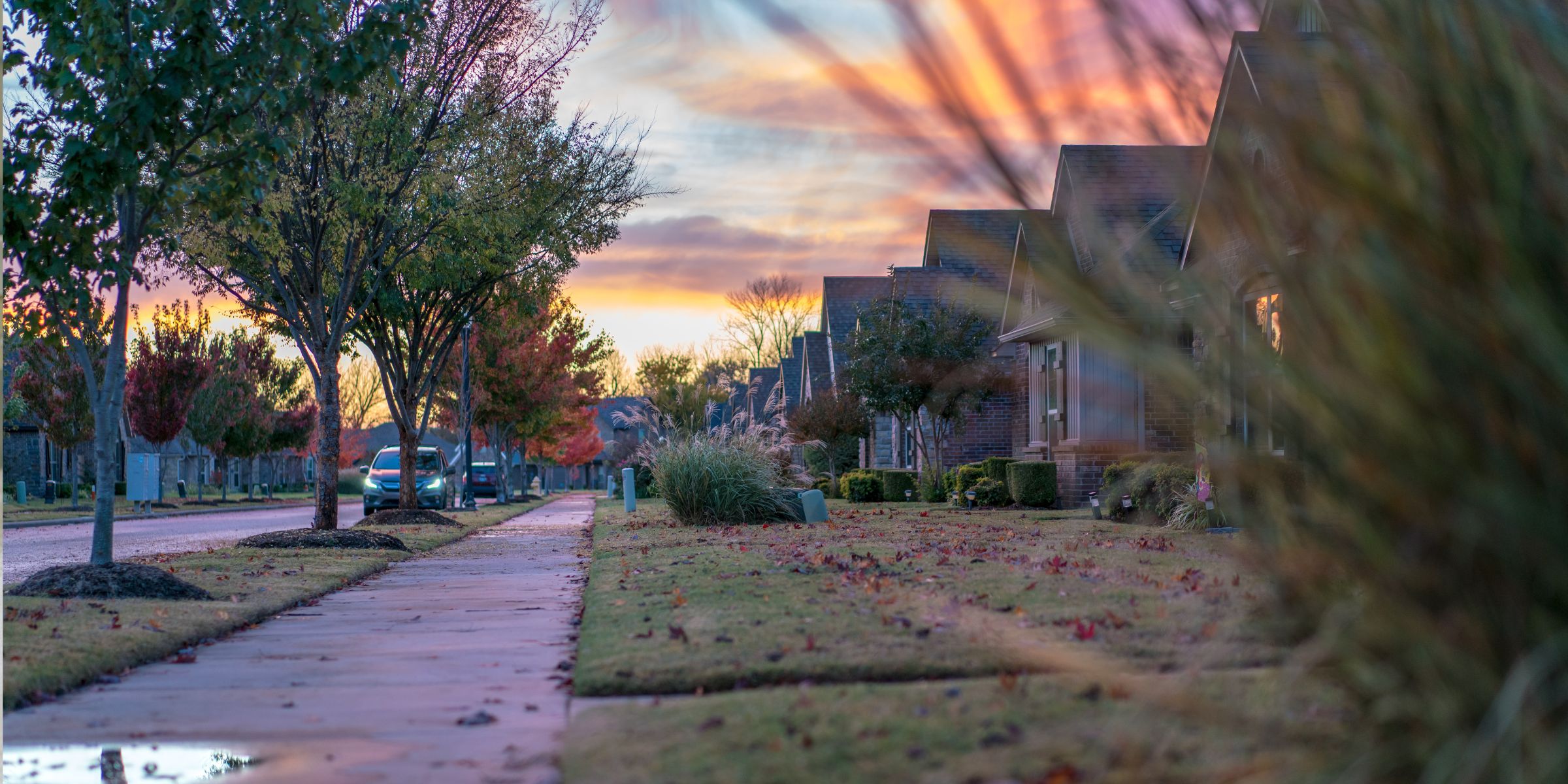
As we drove, I watched the neighborhood pass by in a blur of trimmed lawns and porch flags and people pretending not to stare.
The farther we got from the lake, the harder my heart pounded.
Finally, I said, "Everyone thinks there was someone who died in that bag."
Danner gave a humorless laugh. "So did we."
That sat between us for a beat.
Ruiz looked back at me from the passenger seat. "The boy thought he had stumbled on a horrifying crime scene when he peeped into the plastic bag. That's why the response escalated so fast."
My mouth went dry. "But there wasn't."
"No."
Danner kept his eyes on the road. "What was in there looked human at first glance. Tissue, bone-like fragments, and surgical material. It was enough to trigger every protocol."
Ruiz nodded. "It has now been identified as reserved animal tissue and contaminated waste. Some of it was wrapped together in a way that made it look far worse than it was."
I stared at her. "How does something like that end up in a lake behind a subdivision?"
No one answered right away.
Then Danner said, "There's an abandoned chemical processing plant about eight miles north of your neighborhood. It was closed in the late '90s after an industrial accident."
I thought of all the summers kids had played near that water and dogs splashing in it.
Danner continued, "Most of the records from that place are a mess. We now believe waste was dumped in multiple locations over the years, including runoff channels feeding that lake."
Teenagers loved sneaking beer there at night, I recalled.
Families took pictures by the reeds in autumn like it was something pretty and harmless.
"Jesus."
Ruiz nodded once. "Exactly."
We pulled into a medical complex on the edge of town, but not through the main entrance.
They took me around back to a side building with temporary fencing and white tents set up along the lot.
Men and women in protective gear moved quickly between doors.
My legs felt weak getting out of the car.
Inside, they took my name, asked where I had been standing, whether I had any cuts on my hands, and whether I had eaten or smoked outside that afternoon.
They swabbed my hands even though five days had passed. They drew blood and took my temperature.
They asked if I had headaches, nausea, dizziness, rashes, metallic taste, or shortness of breath.
I kept answering no.
They put me in a private room with a vinyl chair and a humming vent and told me to wait.
That was when my mind got mean.
Because waiting is where fear gets creative.
I thought about Luke's scream and the way he had bolted without looking back.
I thought about Brent and Sheila vanishing by the weekend and about the evidence tech, the detective, the forensic examiner, and the officer.
I thought about every official explanation people had laughed off as obvious lies.
After an hour, Ruiz came in holding two cups of coffee.
She handed me one and sat across from me.
For the first time since showing up at my door, she looked less like a detective and more like a tired human being.
"I know this feels terrifying," she said.
"It feels insane."
"Fair."
"So tell me the truth. All of it."
She took a sip before answering.
"Luke is alive, and his parents are with him. They're in quarantine because Luke had direct exposure. He tore the bag, saw the contents, and may have inhaled aerosolized material when the seal broke."
I gripped the coffee so hard the lid cracked. "Is he sick?"
"He developed skin irritation and vomiting yesterday. That's why Danner reacted the way he did when the radio call came in. He's being isolated and treated while they run more tests."
My stomach dropped.
"The evidence technician tested positive for chemical exposure markers. So did the officer who first cut through the plastic."
I was in shock at how the whole thing had taken such a turn.
Ruiz added, "The forensic examiner had symptoms after opening sealed contents in the lab. The detective assigned to the lake scene handled contaminated packaging before proper classification came in."
This was bad, I thought.
Ruiz's next words calmed me down, "None of them are dead. None of them were taken. They're under observation."
I let out a long breath I didn't know I had been holding.
Then anger came rushing in to fill the space.
"You let the whole town think people were disappearing."
Ruiz's face hardened in that exhausted way that meant she had already had this argument with herself.
"We were told to minimize panic until we knew what we were dealing with."
"By lying?"
"By not releasing uncertain information to a neighborhood built around that water."
I laughed once, sharp and bitter. "You realize people invented something worse."
"Yes," she said quietly. "We do."
That took some of the heat out of me because she did not sound defensive. She sounded ashamed.
I asked, "Why not tell us there was a contamination risk?"
"Because if we'd said that too early, half the neighborhood would have tried to flee before we knew who had been exposed. The other half would have stormed the lake to film it for the internet. We needed people where we could find them."
I hated that it made sense.
"So 'you're next'—"
"Meant next for screening," she said. "And I told Danner he should never say it like that again."
Against all logic, I almost smiled.
A doctor came in after another stretch of waiting. Mehra, late 40s, careful voice, and eyes tired above her mask. She explained more than the detectives had.
The bag, she said, had likely been underwater for years. It contained preserved animal tissue, surgical practice material from an old training contractor, chemical-soaked wrapping, and degraded waste linked to dumping from the defunct plant.
Time and water had turned it into something unstable. Breaking it open released particulate matter and contaminated residue.
The danger was mostly to those who handled it directly.
"Based on what you've told us," she said, "your risk appears low."
"Appears?"
"We still need tests back. But low."
I clung to that word like it had handles.
They kept me there overnight anyway.
At some point, my sister, Talia, called 13 times in a row until I finally answered.
I could not tell her much, only that I was being checked for exposure and did not know when I would be home.
She cried first, then got angry, then demanded names, then promised to bring my dog to her house and feed my plants. That's how my family loves. Loudly and in steps.
The next morning, Danner came to see me.
He looked worse than he had on my porch.
"I owe you an apology," he said.
"Yes."
He accepted that without flinching. "I shouldn't have said it like that."
"No, you really shouldn't have."
He pulled a chair over and sat. "For what it's worth, this has turned into one of the ugliest cases I've worked, and somehow there's no crime, no suspect, and no clean way to explain it to the public without causing a stampede."
"So what happens now?"
He rubbed a hand over his face. "State environmental teams are coming in. Federal people may come in too. They'll test the lake, the feeder streams, and the soil around the banks. They'll probably close the whole area for months."
I thought about the walking trail, the docks, the little bench where older people sat in the mornings, and the ducks kids fed, even though every sign said not to.
Danner was quiet for a second. "He's stable."
That was not the same as okay, but it was something.
When my first round of results came back negative, they released me with instructions, numbers to call, and strict warnings not to go anywhere near the lake or the taped perimeter.
By then, temporary fencing had gone up around the shoreline, and trucks with environmental logos lined the road behind the neighborhood.
The rumors didn't stop after that.
If anything, they got worse.
Because once people smell secrecy, they season it with whatever scares them most.
Some said the government found illegal experiments.
Some said the bag held a missing woman from the next county over, and the contamination story was a fake.
A woman in the neighborhood forum swore her cousin's boyfriend worked dispatch and said there were "teeth" in the bag.
Another man insisted the whole thing was about toxic runoff from military testing because he had seen helicopters.
Nobody wanted the truth because the truth sounded less cinematic than what fear had written for them.
But the truth kept widening.
Within a week, every house near the lake got a visit, interviews, and blood draws for some.
There were questions about pets, gardening, children who played near the water, and whether anyone had eaten fish recently caught there.
A team in marked jackets took samples from backyards that sloped toward drainage channels.
For the first time since I bought my house, the lake looked less like scenery and more like a wound.
Talia stayed with me for three nights because she didn't trust me to be alone, though what she really didn't trust was my imagination.
"You're spiraling again," she said on the second night while eating cereal at my counter.
"I am not spiraling."
"You alphabetized your canned goods."
"That is organizing."
"That is fear with labels."
I laughed despite myself. It felt good. Strange, but good.
A few days later, I got a call from Ruiz.
"Is he all right?" I asked immediately.
"Luke is better," she said. "Still in quarantine. But better."
I sat down at my kitchen table and cried harder than I had since this began.
Not because the danger was over.
Because it wasn't.
But because 13-year-old Luke, after dragging a nightmare out of the lake, was doing better.
Months passed before the fencing came down.
By then, reed had been cut, sediment had been tested and treated, and crews had pulled more buried waste from a section of shoreline farther north.
Not bags like Luke's, but enough contaminated debris to make every official meeting in town feel like a controlled fire.
The neighborhood changed after that.
People who once bragged about lake views started keeping their blinds closed.
Parents who had let their kids roam all summer suddenly wanted texts every hour.
The house across from mine sat empty until late October, when Brent and Sheila finally came back with Luke, looking thinner, paler, and older in the face.
I carried over a casserole because that's what you do when language isn't enough.
Sheila opened the door and burst into tears before I even spoke.
We stood there hugging in her doorway while the dish cooled between us.
Luke came out of the hall a minute later. He had a small scar-like patch near his wrist where irritation had healed.
He looked embarrassed to be seen.
"Hey," I said softly.
"Hey."
"You gave us all a scare."
His mouth twisted. "Sorry."
"Don't you dare apologize," I said.
Brent appeared behind him and put a hand on his shoulder.
His own face looked wrecked, as if sleep had stopped recognizing him months ago.
"They told us," Brent said quietly, "if Luke hadn't ripped it open, we might never have known there was a leak path into the lake bed. Not until more people got sick."
That sat heavy in the entryway.
The boy who thought he had found something human had actually uncovered a warning.
Weeks later, the town held a public meeting in the high school auditorium.
State experts stood under fluorescent lights and used slides and diagrams to explain contamination spread, historic dumping practices, containment work, sediment remediation, water sampling, and long-term monitoring.
It was the kind of meeting where facts should have calmed people.
They didn't. Not completely.
Fear had lived here too long by then.
Still, one sentence stayed with me. A woman from the environmental response team said, "The discovery likely prevented future exposures that would have been much harder to trace."
That night, I stood at my kitchen window again, looking out toward the lake. The water looked smooth and ordinary, like it had not spent months terrifying an entire neighborhood.
That was what haunted me most in the end.
It was how normal everything had looked.
How disaster can sit quietly beneath a surface people trust.
How easy it had been for all of us to believe we were living inside a crime story because that made more sense than the truth.
For days, everyone in town talked like something evil had been hunting people down.
It hadn't.
There was no killer.
There was only a lingering disaster buried in mud and water.
A disaster brought by people who dumped dangerous things where families would one day build homes and children would one day fish after school.
And when that disaster finally surfaced, it looked enough like a criminal case to make us invent the rest.
I still think about the moment Danner said, "You're next."
At the time, I thought he meant death was moving door to door.
What he really meant was simpler and, in its own way, crueler.
I was next to learn how close we had all been to being sick or even dying from contamination.
By spring, the water was declared safe again in phases.
The walking trail reopened. Then the benches and the western bank.
People came back carefully, like churchgoers returning after a fire.
Luke still fishes sometimes. Not at the lake.
His father drives him 20 minutes out now to a river farther south.
Sometimes I see them loading their gear into the truck at dawn. Brent checks every tackle box twice. Sheila watches from the porch until they drive off.
I understand that.
Some discoveries do not stay where they happen.
They move into the people who saw them.
As for me, I still use the kitchen window more than any other in the house.
I still notice too much. I still build stories when things go quiet.
But now, when the neighborhood settles into evening, and the lake behind us catches the last of the light, I don't think about a crime.
I think about black plastic breaking the surface.
A boy screaming.
And the terrible truth hidden inside.
Were the authorities protecting the town by controlling information, or were they protecting themselves from blame?
If you enjoyed reading this story, here's another one you might like: Every morning at exactly 9 a.m., Olivia received 40 blue roses with no card, no sender, and no explanation. At first, she thought it was love. Then her husband denied sending them, and one chilling family tradition made her call the police.